



Recent events in this month of August have prompted another round of public argument about education as an academic field. Some of the criticism concerns particular kinds of scholarship, and some of it deserves attention. Education should be open to intellectual scrutiny, as should sociology of education. There is reductive work in our field, familiar binaries are sometimes rehearsed long after they have ceased to illuminate very much, and theoretical or political commitments can occasionally appear to determine conclusions before inquiry has properly begun.
What troubles me is the ease with which criticism of particular scholarship slips into the suggestion that education itself is somehow not a serious intellectual field.
I have heard versions of this for years. Education, we are told, is not history or philosophy. It lacks a proper disciplinary object. It borrows from psychology, sociology, philosophy, economics and political science. At its worst, according to this view, it consists of teachers talking to other teachers about teaching, surrounded by an unnecessary vocabulary of theory.
There is much wrong with this characterisation, although I wonder whether education has inadvertently contributed to it through its own preoccupation with improvement.
Better schools, better teachers, better leaders, better outcomes, more effective interventions and greater impact have become familiar ways in which educational work is justified. Educational research is consequently expected to lead somewhere. Having identified and explained a problem, the researcher is expected to say what somebody ought to do about it.
I encounter this constantly in my own work. I have worked and spoken about education in very different university environments in the last five years: at the Universities of Manchester, UCL, Melbourne, Nottingham Ningbo, Cambridge to name but a few. The institutional and cultural settings vary considerably, yet one question follows with remarkable consistency.
I might spend some time trying to understand how algorithmic systems are changing the conditions of childhood, what happens when educational time accelerates, whether inequality might concern the conditions under which children become as well as the resources they possess, or whether educational leadership might involve stewardship rather than continual optimisation.
With remarkable predictability, and usually right off the bat, someone will ask: ‘So what do we do?’
It is usually a sincere question, and often comes from extremely thoughtful people. Increasingly, however, I find myself wondering why I should know.
When did the scholar become a consultant?
This is not an argument against action. Education is a practical activity. Children have to be taught, schools have to be organised, universities have to make decisions, and teachers and educational leaders encounter problems requiring responses every day.
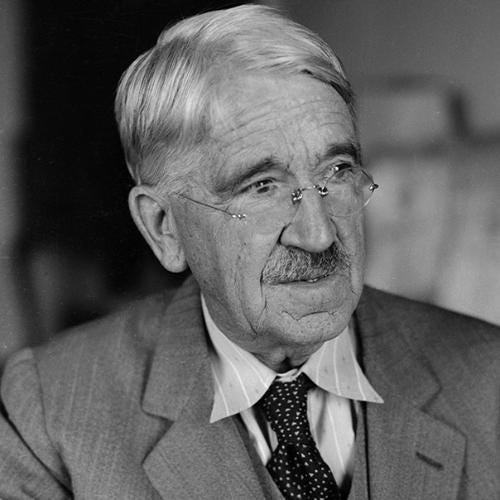
Nor do I think scholarship should retreat into abstraction and regard practice as somehow beneath it. John Dewey would have little patience with such a distinction. Thinking and experience are intimately related, while Paulo Freire’s conception of praxis similarly refuses any easy separation of reflection and action (Dewey, 1938; Freire, 1970).
My concern is with the assumption that the intellectual value of educational thought must be demonstrated through its capacity to generate action.
The expectation is now so familiar that we barely notice it. Research papers have ‘implications for practice’. Funding applications promise ‘impact’. Conference audiences ask for recommendations. Leadership scholarship produces frameworks and models. Policy research is valued partly according to its capacity to inform policy. Universities increasingly describe knowledge through the language of outputs, users, stakeholders and impact.
Somewhere in this process the scholar has acquired some of the characteristics of the consultant, expected to diagnose an educational problem and then provide a response.
I am no longer convinced that this is always what scholarship is for.
Requiring scholarship to produce solutions also begins to change the questions we consider worthwhile. Problems become things upon which somebody should be able to act, while some of the most important questions in education resist that treatment.
Education has always asked difficult questions
What does it mean to become educated? What obligations do adults have towards children? How does a child become capable of judgement? What should one generation preserve for another? What forms of authority are legitimate in education? How do social structures enter into the formation of the self? What happens to human freedom when the conditions within which choices are made are increasingly organised by institutions and technologies?
These are educational questions, although they are also philosophical, sociological, psychological and political ones. I have never understood why this should count against education as an academic field. It seems instead to follow from the complexity of what education is concerned with: human beings growing, learning and becoming within a world that precedes them.
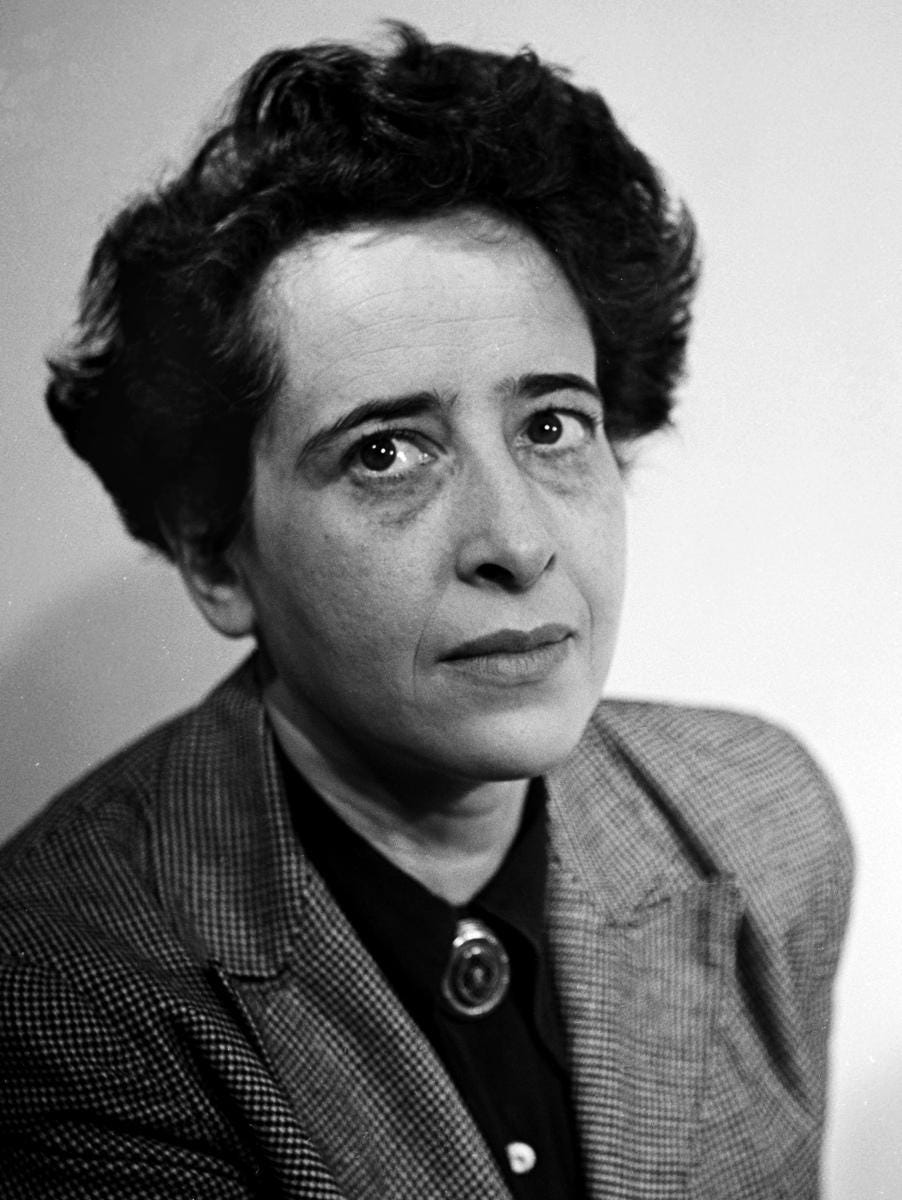
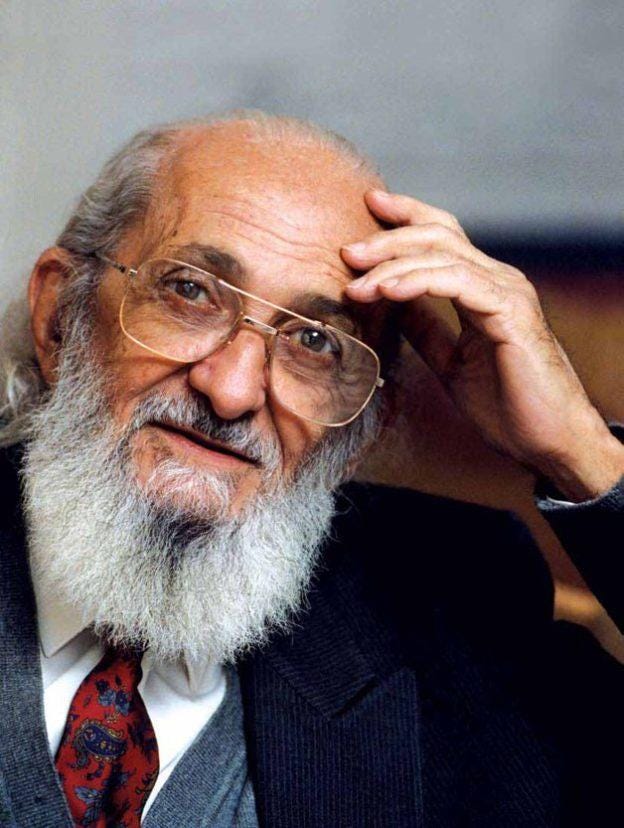
Hannah Arendt approached education through the relationship between the newcomer and an already existing world. Education carries a responsibility towards the child who arrives and towards the world into which that child is introduced (Arendt, 1961). Lev Vygotsky understood human development through the social and cultural relations within which higher psychological capacities emerge (Vygotsky, 1978). Dewey placed experience, democracy and the reconstruction of meaning at the centre of education (Dewey, 1916). Freire asked what education means under conditions in which some human beings are denied the possibility of becoming subjects of their own lives (Freire, 1970).
Their intellectual traditions and purposes differ considerably. What interests me here is that we continue to read them decades after their deaths. Dewey died in 1952, Vygotsky in 1934, Arendt in 1975 and Freire in 1997. Their continued importance can hardly rest upon the contemporary usefulness of their recommendations. We return to them because the problems with which they struggled remain recognisable and because their work gives us ways of seeing those problems that we might not otherwise possess.
The strange fate of useful knowledge
Education’s preoccupation with usefulness has a history. The field has always had a practical orientation, but over recent decades this has become entangled with wider changes in universities and public institutions. Managerialism, performativity and the growing emphasis upon evidence, improvement and impact have all contributed to an environment in which knowledge is increasingly asked to demonstrate what it does.
Stephen Ball’s work has been especially important in showing how policy technologies alter the conditions under which educational subjects understand themselves and their work. Performativity does more than measure an independently existing educational reality. It changes behaviour, relationships and professional identities by reorganising what counts as valuable and visible (Ball, 2003).
I wonder whether something comparable has happened to educational scholarship.
We have become accustomed to an intellectual sequence in which a problem is identified, evidence gathered, an intervention proposed, an outcome measured and impact demonstrated. For many research questions this is entirely appropriate. If we want to establish whether a particular intervention improves early reading, there are rigorous ways of investigating precisely that.
Difficulties arise when this becomes the assumed form of serious educational knowledge. Questions which cannot readily be organised around intervention and outcome then appear incomplete, while understanding itself begins to require further justification.
‘Yes, but what do we do?’
I have become increasingly interested in the persistence of this question because it appears almost regardless of what I am discussing.
If I argue that algorithmic systems increasingly participate in shaping attention, time and judgement, somebody asks what we should do. If I suggest that childhood is being temporally compressed by systems organised around prediction, optimisation and continuous engagement, the same question follows. If I propose that educational inequality should include differences in the conditions under which young people develop autonomy, judgement and relationships with others, again I am asked for the response.
There is something peculiar about applying this expectation consistently across intellectual life.
Martin Heidegger asks what it means to be. Must the argument culminate in recommendations for Monday morning? Arendt investigates the human condition. Does its value depend upon producing guidance for school leaders? Michel Foucault traces the historical formation of disciplinary power. Would the analysis be strengthened by an implementation strategy?
These thinkers have undoubtedly affected action. Foucault changed how generations of scholars understood institutions, knowledge, normalisation and power. Arendt changes how we might think about authority, responsibility and the relationship between generations. Heidegger, whatever else we make of him, unsettles assumptions about technology, existence and our relationship with the world.
Their contribution lies partly in having changed what others were capable of seeing.
Seeing differently matters
Contemplation is easily mistaken for passivity in a culture accustomed to intervention. Description can appear inadequate when it is not followed by a solution, and research without an obvious recommendation can seem detached from practical concerns.
Yet thinking can accomplish something before any intervention takes place. It may give language to an experience that was previously difficult to articulate, show that an arrangement regarded as natural has a history, or reveal social patterns in experiences we had understood as individual. Sometimes its importance lies simply in making familiar practices less obvious than they appeared before.Nothing material necessarily changes at the moment this happens. Our understanding of what is happening may nevertheless have altered considerably.
This matters in education because action depends upon interpretation. A child understood primarily through a language of deficiency invites one range of responses. The same difficulty understood through social relations, institutional structures or developmental conditions opens others. Educational leadership conceived principally as the optimisation of organisational performance produces different priorities from leadership understood as responsibility for the conditions under which other people live, work and develop.
There is no educational action independent of some prior account of what the situation means. Understanding therefore has consequences even when it does not prescribe them.
What sociology of education is actually for
This is one reason why some of the recent dismissal of sociology of education concerns me.
I am not a sociologist of education, although I draw upon sociological work quite often. I also have reservations about parts of the field. Identity can become an intellectual cul-de-sac when categories harden rather than illuminate. Structural explanations can become so comprehensive that human agency almost disappears. Critical scholarship sometimes settles into familiar oppositions in which the distribution of power and the conclusion of the analysis are apparent from the beginning.
Those seem to me arguments for doing better sociology.
Identity remains educationally significant because education participates in the formation of identity. Class matters because children do not enter educational institutions detached from material and cultural worlds. Race, gender and language matter because schools and universities are inhabited by people whose experiences are not interchangeable. Power matters because education involves authority, classification, inclusion, exclusion and decisions about what knowledge deserves attention.
Becoming matters because education has always been concerned, at least in part, with the people we become.
Poor scholarship does not invalidate these questions. History contains bad history and philosophy contains bad philosophy. Neither circumstance has persuaded us that the underlying field of inquiry should be abandoned.
This does not mean that sociology of education is in particularly good intellectual health. Some of its familiar concerns have become so settled that inequality, identity, power and exclusion can occasionally appear as conclusions rather than questions. When the categories brought to an inquiry already anticipate what will be found, there is little room for surprise. This may be part of the present difficulty facing the field. The educational world is changing rapidly, and sociology needs concepts capable of encountering those changes without already knowing what they mean.
Perhaps we have misunderstood seriousness
There is an irony in education sometimes being considered intellectually inferior to more established disciplines because it appears so relentlessly practical.
History does not have to improve the past, and philosophy is rarely expected to demonstrate measurable improvements in being. Their intellectual legitimacy rests partly upon the idea that understanding human experience is worthwhile.
Education should be able to make the same claim without severing its relationship with practice. Being concerned with practice is different from being subordinate to it.
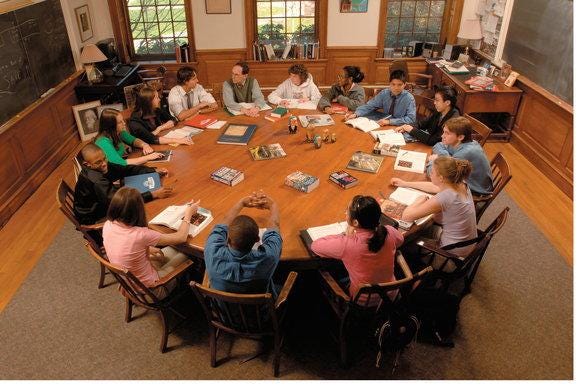
A serious field of education has room for empirical researchers evaluating interventions, historians reconstructing educational worlds, sociologists examining institutions and inequalities, psychologists studying learning and development, and philosophers and theorists asking questions for which there may never be an intervention. A field concerned with human formation would be considerably diminished if any of these disappeared.
The outsourcing of judgement
There may be something else behind the persistent question, ‘What do we do?’
We inhabit a culture in which expertise increasingly arrives in the form of advice. Consultancy and leadership culture are saturated with prescriptions, while schools are now routinely told by technology companies how they should prepare young people for the future. Academics are easily drawn into the same relationship.
When somebody presents a difficult diagnosis, it can therefore seem natural to look back towards the person who made it and ask for the answer.
I am increasingly unsure why that person should possess it.
If I spend years trying to understand how algorithmic systems alter the temporal conditions of childhood, this does not necessarily qualify me to tell a headteacher in Shanghai, a teacher in Manchester, a parent in Milan and a policymaker in London how each should respond. They occupy different circumstances, possess different knowledge and carry different responsibilities.
They have to exercise judgement.
Scholarship can contribute to that judgement without taking it over. It can show that something has not been understood adequately, offer another way of seeing it, expose assumptions beneath established practices and trace consequences that have received too little attention.
What follows cannot always be supplied in advance.
Education’s contradiction
This leaves education with a curious contradiction. We constantly claim to value critical thinking. We want children to evaluate evidence, university students to question assumptions, teachers to exercise professional judgement and doctoral students to interrogate rather than reproduce existing knowledge.
Yet educational scholarship is repeatedly asked to justify thinking by explaining what somebody should do with it.
Perhaps an educational response to an important idea can sometimes be to spend time with it, disagree with it, test it against experience, find its weaknesses or recognise through it something that had previously escaped attention. One might eventually decide that action is required. One might decide otherwise.
The important point is that judgement remains with the person making the judgement.
That seems much closer to education than compliance with somebody else’s recommendation.
There is also a question here about the conditions education provides for becoming. If our response to uncertainty is to ask what we should do, and then look for somebody to supply the answer, what are we teaching students about thought? The consultant has become a familiar presence in education partly because uncertainty can be turned into a service. The problem is diagnosed, a framework supplied, and the way forward explained, usually at a price.
Education should leave room for something else: time to think alone and with others, to return to the past, imagine different futures, and stay with questions whose answers are not immediately apparent. Judgement develops partly through experiences of this kind. They allow people to work out their own relationship with a problem rather than inherit somebody else’s response to it.
If education loses confidence in this, the problem goes well beyond its standing as an academic field. We may become very good at producing knowledgeable and well-credentialled people who are nevertheless accustomed to looking elsewhere for the answer. There is something rather bleak about the educated person becoming, in the end, a well-informed customer waiting for the next solution to be delivered.
The right to think before acting
Scholars should, of course, be asked difficult questions. We should explain why our work matters and write clearly enough for people outside narrow disciplinary communities to engage with it. I am less convinced that this requires us to prescribe what follows from it. Scholarship sometimes provides answers; sometimes it changes the question or makes an established explanation harder to sustain.
I am less convinced that consequence should always take the form of prescription.
There are occasions when scholarship can provide answers. At other times its contribution is to improve the question, reveal something that has been overlooked, or make an established explanation increasingly difficult to sustain.
Arendt, Dewey, Vygotsky, Freire, Foucault and Ball continue to matter because their work has not been exhausted by whatever practical recommendations might once have been drawn from it. They left behind problems which remain worth thinking about.
Education needs greater confidence in this kind of intellectual work.
A field concerned with becoming cannot restrict itself to asking what works. It also has to ask what our practices do to people, what kinds of worlds they produce, what forms of human life they encourage, and what may be disappearing while our attention is fixed upon improvement.
So when somebody next listens to an educational argument and asks me, ‘Yes, but what do we do?’, perhaps the most reasonable answer I can give is:
‘I don’t know. But perhaps we should understand what is happening before we decide.’

References
Arendt, H. (1961). ‘The crisis in education’. In Between Past and Future. New York: Viking Press.
Ball, S. J. (2003). ‘The teacher’s soul and the terrors of performativity’. Journal of Education Policy, 18(2), 215–228.
Dewey, J. (1916). Democracy and Education: An Introduction to the Philosophy of Education. New York: Macmillan.
Dewey, J. (1938). Experience and Education. New York: Macmillan.
Freire, P. (1970). Pedagogy of the Oppressed. Translated by M. B. Ramos. New York: Herder and Herder.
Foucault, M. (1977). Discipline and Punish: The Birth of the Prison. Translated by A. Sheridan. London: Allen Lane.
Vygotsky, L. S. (1978). Mind in Society: The Development of Higher Psychological Processes. Edited by M. Cole, V. John-Steiner, S. Scribner and E. Souberman. Cambridge, MA: Harvard University Press.
The most important line in this piece is that there is no educational action independent of some prior account of what the situation means, because it explains why scholarship that changes how we see things is not a luxury but a precondition for acting well. What would it mean for schools to value research that sharpens interpretation as highly as research that prescribes intervention?
The best "class" I ever took on education was for my masters in SJC's Great Books program. It was a preceptorial entitled "Education and Pedagogy." Here was the reading list: Plato, Meno, 80D–86C; Plato, Republic, VII; Aristotle, Politics, VII.14–VIII.7; Montaigne, “On the Education of Children”; Rousseau, Emile, III; Augustine, The Teacher (complete); Nietzsche, On the Future of Our Educational Institutions, I–II; B. T. Washington, “Democracy and Education”; W. E. B. Du Bois, The Souls of Black Folk, VI; Woolf, A Room of One’s Own, II–III; Weil, “Reflections on the Right Use of School Studies...”; Postman, The End of Education, I; Dewey, Experience and Education (complete); Arendt, “The Crisis in Education”; Oakeshott, “A Place of Learning”; C. W. Eliot, “Liberty in Education”; McCosh, “The New Departure in College Education”; Hook, “A Critical Appraisal of the St. John’s Curriculum”; Brann, “Liberal Education.” Almost all are publicly available - I like the mention of modern educational scholars, but most of these readings I did not encounter in my graduate programs and all the early stuff is incredibly generative and thoughtful for the kinds of inquiry I think you are advocating. We forget at our peril that we have been grappling with the question of "What does it mean to be educated?" for centuries.